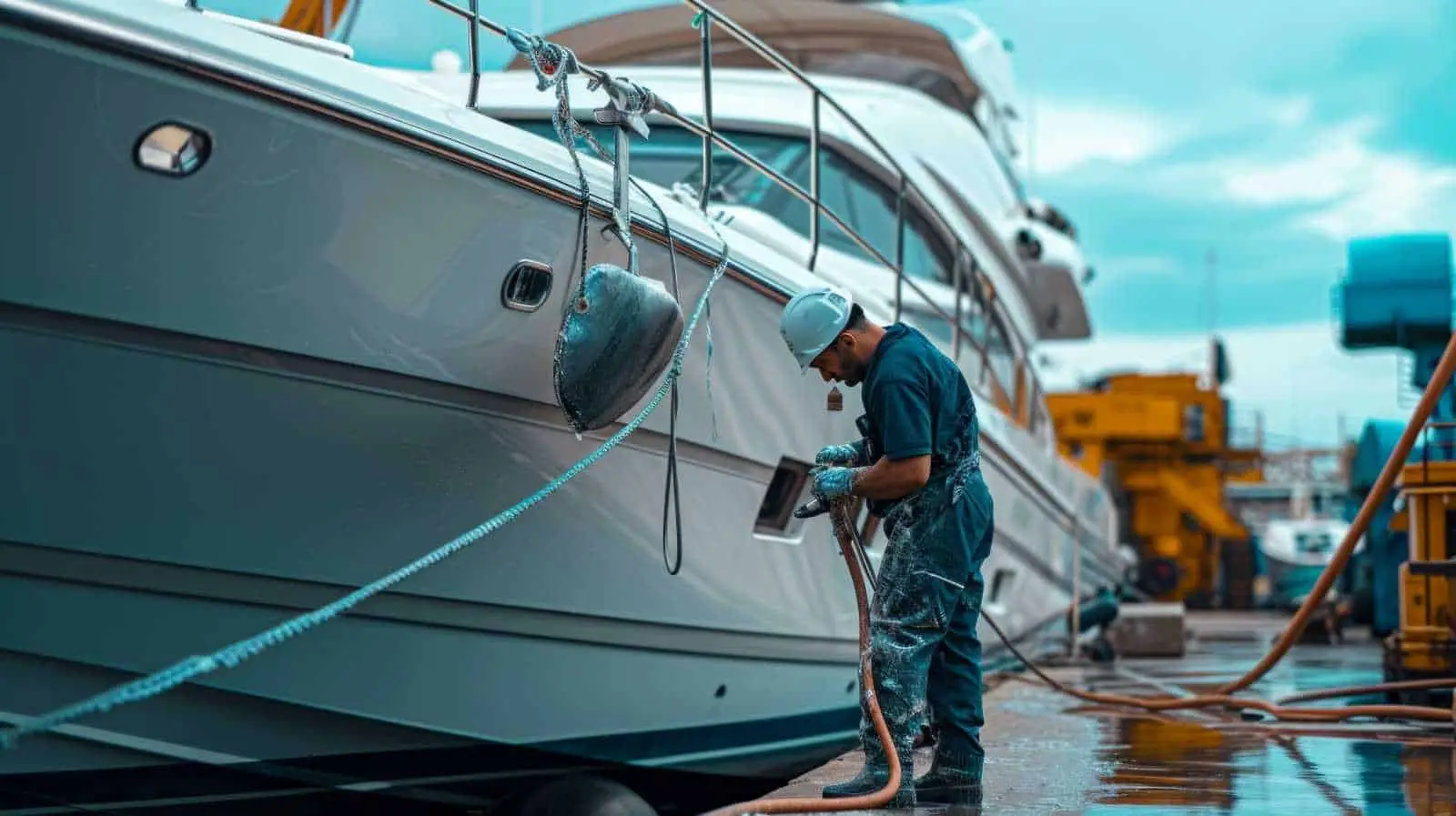
Winterisation tends to focus on the engine because freeze damage there can be expensive and immediate. In practice, spring delays are just as often caused by smaller systems: water trapped in a low point, a battery left at poor state of charge, a seized seacock, damp around an electrical connection or a pump that was never tested after months of inactivity. A good lay-up is therefore a controlled shutdown of the whole boat, followed by a written route back into service.
Build the lay-up around the storage conditions
A boat staying afloat through a mild coastal winter has different risks from one stored ashore in an exposed yard. Shore-power availability, access frequency, ventilation, expected frost, rain exposure and whether the vessel can be checked during the winter all change the sensible plan. The first task is to decide what must remain live for safety and what can be isolated.
That distinction should be written down. Bilge pumping, alarms or monitoring equipment may need power while domestic circuits, entertainment systems and non-essential loads can be isolated. If the boat will be visited periodically, the schedule for those checks should be part of the lay-up rather than an informal intention that is forgotten after Christmas.
Freshwater holds more than the tank
Draining the main freshwater tank does not necessarily drain the system. Pumps, filters, calorifiers, shower mixers, deck-wash lines, transom showers and low sections of hose can retain water. The correct treatment depends on the installation, but the principle is to identify every place that can trap a small volume and either drain, isolate or protect it in a controlled way.
Calorifiers are easy to overlook because they can retain water even when taps have been opened. Mixer cartridges and shower heads can also hold enough water to suffer in a hard freeze. Where any treatment product is used, it must be appropriate for the particular system and the recommissioning plan must state what needs flushing before the water is used again.
Sea-water circuits need their own route through the boat
Heads, raw-water pumps, strainers, air-conditioning circuits and wash-down systems may contain sea water even after the freshwater side has been dealt with. Seacocks should be operated and their condition noted, hoses inspected where accessible, and strainers left in a known state. A valve that is stiff at lay-up is unlikely to improve during months of inactivity.
The key is traceability. If a seacock is deliberately left open or closed for a particular reason, that state should be recorded. Spring recommissioning then becomes a controlled sequence rather than a search for which valve somebody moved months earlier.
Batteries dislike neglect, not just cold
A battery left partly discharged can deteriorate through the winter, and an unnoticed parasitic load can flatten a bank long before the owner returns. Lay-up should record battery condition, isolation status and the arrangement for safe maintenance charging where one is used. Connections should be clean, secure and protected from an environment where condensation can encourage corrosion.
In spring, open-circuit voltage alone is not enough to prove a battery bank is healthy. Charging response and behaviour under load give a better picture. A bank that reaches a plausible voltage but collapses when asked to operate a windlass, thruster or engine start may have aged significantly during storage.
Ventilation is a balance, not simply “more air”
Closed boats create their own microclimate. Condensation can mark timber, corrode electrical connections, soften headlinings and leave upholstery carrying odour before obvious mould appears. Ventilation should suit the storage environment: uncontrolled openings can admit driving rain or salt-laden air, while a completely sealed interior can trap moisture.
Soft furnishings benefit from airflow around them. Locker doors can be positioned to avoid stagnant pockets where safe to do so, wet gear should be removed, and bilges should be left as clean and dry as practicable. Dehumidification can be useful in some circumstances, but it depends on dependable power, drainage and safe installation rather than being a universal answer.
The engine is still central, but it is one system among many
Engine lay-up follows the manufacturer’s requirements and the vessel’s cooling arrangement. Fuel condition, filters, oil, coolant protection, raw-water components and exhaust-side condition all deserve consideration. The aim is not to perform every possible service item on the same day, but to leave the engine in a known protected state with clear notes about what was completed and what is due before launch.
If the vessel is staying afloat, periodic operation is not automatically preferable to a proper lay-up. Short, lightly loaded runs can fail to bring systems fully to temperature and may create their own condensation issues. The decision should be made around the engine guidance and the actual way the boat can be operated during storage.
Keep one recommissioning sheet with every system intentionally drained, isolated, disconnected, treated or left live. Add valve positions, battery-isolator state and any marginal component noticed during lay-up. The best spring checklist is the winter record turned backwards.
Small systems create disproportionate spring delays
Bilge pumps, float switches, shower pumps, toilet pumps, windscreen washers and deck-wash equipment may not appear important until launch day. A stuck float switch or brittle hose can prevent a boat being left safely afloat. These items should be tested before winter where possible and then included in the spring functional check.
Seacocks and hose clips deserve particular attention because they sit at the boundary between the sea and the boat. Corrosion, stiffness, cracking or poor access discovered during lay-up can be addressed while time is available, rather than after the vessel has been launched and the sailing calendar has started.
Interior timber and upholstery need preservation, not just cleaning
Salt, damp and restricted airflow are hard on interior finishes. Timber should be inspected for lifting varnish, darkening around window frames and signs that moisture is entering from deck fittings or glazing. Upholstery should not be stored against damp surfaces, and lockers containing absorbent materials need airflow if the storage arrangement permits it.
A winter is also a good time to separate cosmetic ageing from active water ingress. If a stain is marked and photographed at lay-up, it can be compared during later checks. A growing mark suggests that the leak is still active; a stable one may point to older damage that can be scheduled for cosmetic restoration rather than urgent sealing work.
Do not forget safety and deck equipment
Fire extinguishers, gas isolation arrangements, emergency lighting, shore-power leads, mooring lines and fenders all belong in the winter picture. A boat staying afloat may spend months exposed to chafe and changing water levels. Lines that were adequate for a weekend berth may need different protection for unattended winter conditions.
Deck drains should remain clear, covers should be tensioned so they do not collect heavy pools of water, and anything removed for storage should be recorded. Recommissioning is smoother when the owner knows exactly which safety items are off the boat and need to return before normal use.
Pair lay-up and recommissioning as one maintenance story
Booking the shutdown and spring return as connected scopes creates continuity. The technician returning in spring can see what was isolated, what was marginal and which readings or observations are worth comparing. Fluids are checked, valves returned to the intended position, batteries tested, pumps run and systems brought online in a deliberate order.
The final stage is not simply “engine starts”. Water systems should be checked for leaks after repressurising, charging behaviour confirmed, bilge pumping tested, and any equipment that was disconnected or removed restored. A short controlled systems test alongside is far cheaper than discovering the first fault while manoeuvring away from the berth.
A written record is the most useful winter tool
Boats contain too many valves, switches and local modifications to rely on memory. A concise lay-up record should tell the spring technician what state the vessel was intentionally left in, which parts were known to be near the end of their life, what maintenance was completed and what remains due. Photographs of isolators, valve positions and unusual access arrangements can make that record even more useful.
Winterisation succeeds when spring recommissioning becomes predictable. The purpose is not to make the boat dormant; it is to preserve systems, expose marginal items while there is time to deal with them, and leave enough information that returning the vessel to service is a controlled engineering process rather than a sequence of surprises.